
Class Dojo
In our school this is used mostly to motivate the students to abide by the class code and school rules. Funny creatures as the students’ avatars make it possible for discipline to be an entertaining and cheerful process, and makes gaining points extremely satisfying.

Exchanging postcards
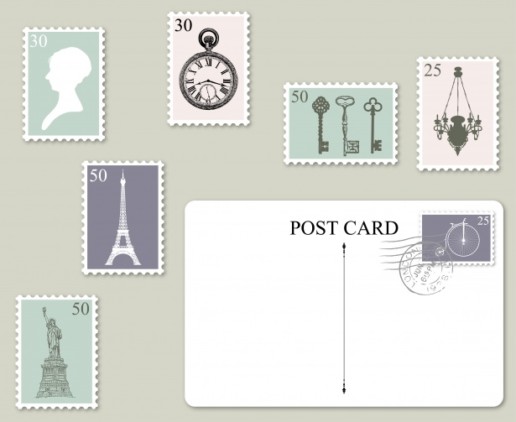
Exchanging postcards is a programme which is great fun for children living in times during which we are surrounded by social media that make it possible for us to contact people all over the world through just a few clicks. In the age of computers and the Internet the custom of communicating via traditional means is ever diminishing.
Sending postcards and letters has become uncommon – especially amongst younger generations – and the post office has become an unfamiliar place. The children exchange postcards with students of other schools taking part in the project.
The postcards, which are related to the location and surrounding area of the senders’ schools, contain greetings and short messages. The postcards are placed on a map of Poland.
Góra Grosza
Every year, in late November and early December, in schools and kindergartens a great collection of coins takes place, called Góra Grosza.
The aim for which this small change is collected is to help children who are being brought up outside their families – in children’s homes or foster families. An indirect, but most important aim of the project is educational action – showing the youngest amongst us, what a force can be made through the small help of many people and collective action for the benefit of those in need.
Keep a Sober Mind
Schools and local governments take part in this campaign, which combines prophylactics with education and play. As part of the campaign, experts (psychologists, doctors and teachers) prepare sets of materials with prophylactic purposes.
The materials are helpful in organising educational workshops for children, youth and parents. The workshops can also be carried out during classes at school or special meetings. Apart from workshops for students we also offer materials which are helpful in educating parents. The crowning moment of the children’s educational challenges (workshops, lessons) are competitions which are topically linked to the campaign: artistic, literary and photographic, both in groups and individually.
The competitions, in addition to healthy rivalry, cooperation and engagement, also convey prophylactic content.
Run for health
„Run for health” is a new program of anti-nicotine education developed in the Main Sanitary Inspectorate in collaboration with experts.
The age group which the program is aimed at is children from class 4 of primary school (ages 9-10).
Main aims of the program:
– delaying or prevention of nicotine initiation amongst children and youth,
– showing the attractiveness of life in an environment free of cigarette smoke,
– increasing knowledge and abilities of students regarding health in the context of the harmful effects of smoking cigarettes.
We Save and Teach How to Save
The educational program „Ratujemy i Uczymy Ratować” (“We Save and Teach How to Save” is run by Jurek Owsiak’s WOŚP (Great Orchestra of Christmas Charity) and is aimed at classes 1-3 of primary schools.
Learning the rules of first aid is not all – the action taken in order to save lives by the witnesses of an incident is hugely influenced by their attitude, confidence in their abilities, and also fears which frequently accompany them. The program RUR introduces workshops on basic life-saving actions already in the first years of primary school.
Children familiarise themselves with such important issues, develop the right habits – first aid becomes something natural for them. We extend this program to classes 4-6.
Little Lifesaver
Promotion of Healthy Lifestyle under PCH, for classes 1-6.
The aim of the program is to interest children in the issue of promotion of healthy lifestyle and administering first aid.
School Patrol
The informative and educational action being taken by the Straż Miejska in Bielsko-Biała covers the main aims of widely understood preventive measures, e.g. minimalisation of risky behaviour and promotion of a healthy and safe lifestyle. The workshops are intended for children at pre-school age and children from classes 1 to 6. Each workshop is tailored to the age and level of the listeners and the needs of their teachers. Most workshops are enriched by multimedia presentations on topics such as:
“Safe way to school/kindergarten”
“Safety in contacts with strangers”
“Defence against the attack of an aggressive dog”
“Little guardians of nature”
“Cyberviolence and bullying”
“Safe winter holidays”
“Safe summer holidays”
School integration
This is a cycle of sessions organised at the start of each school year by the form teachers with the participation of the school pedagogue.
The main aim of the sessions is to support the process of integration and development of relationships between children. Participation in the suggested games and exercises enables closer connections within a peer group. It allows children to get to know each other better, look more closely at the relationships they are forming, and also perfect the ability to co-operate. The sessions help to increase students’ feeling of safety within a group and allow them to look at relationships within their class from a new perspective.
In following the original programme we also pay attention to co-operation with parents, so at the start of each school year we organise an integration trip for children, parents and teachers, who carry out special encoded tasks during an exhilerating walk in the Beskidy Mountains and thus aim, at least to some extent, to meet the above aims.
Milk at school
The aim of the programme “Milk at school” is to nurture good eating habits amongst children and teenagers.
During their time at school students consume white milk and flavoured milk with different percentages of fat, along with cheeses, cream cheeses and yoghurts.